Why We Can't Resist an Old Wooden Boat Being Brought Back to Life
Peeling varnish, soft planks and someone who simply refuses to give up on her. A KeelFair note on the quiet joy of a wooden boat restoration.
Los artículos del diario se publican en inglés.
By Douglas Cook · Founder, KeelFair
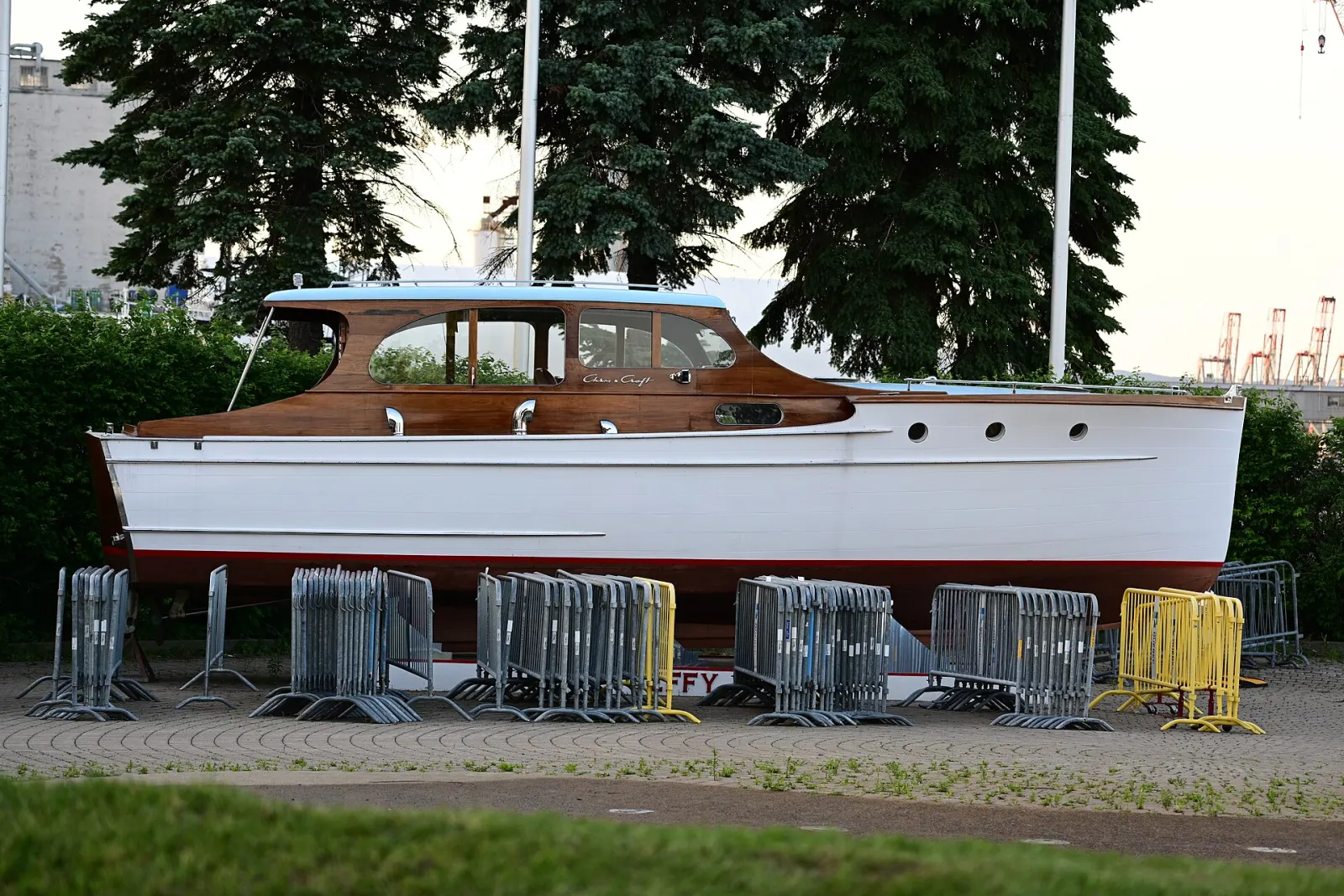
Header image: a classic varnished wooden motor yacht laid up ashore in Quebec City, Canada. Photo: Wilfredor, CC0, via Wikimedia Commons.
Every boatyard has one. Tucked away at the back, under a tarpaulin that has seen better days, there’s an old wooden boat that everybody walks past.
The varnish has gone grey. A few planks have opened up. There’s a bucket in the cockpit catching the rain. People stop, shake their heads and say, kindly enough, "Ah, she was lovely once."
And then one day, someone doesn’t walk past.
That’s the start of my favourite kind of boating story.
The person who sees what she could be
There’s something about a restoration that gets to almost everybody, even people who have never held a chisel. I think it’s because it’s a story about seeing something the rest of the world has written off and deciding it’s worth saving.
Picture it. The new owner pulls back the cover for the first time. Most of us would see a list of problems. They see the sweep of the sheer line, the shape of the transom, the way the bow was drawn by someone who knew exactly what they were doing, decades ago. They see the boat she was, and the boat she can be again.
It’s the same instinct that keeps me watching boat tour videos late into the evening. My favourite tours are always of boats that someone has clearly loved: the varnish kept up, the engine room clean, the little improvements made over the years. A restoration is that love in its rawest form, starting from the very bottom.
Slow work in a fast world
I build software for a living, and in my world things change in minutes. You type, you save, you deploy, and it’s done.
Wooden boats don’t work like that, and I think that’s a big part of their charm. A restoration runs on a different clock:
- Scraping back the old paint and varnish, a layer at a time, until the wood underneath finally shows itself.
- Finding the soft spots and deciding, plank by plank and frame by frame, what can be saved and what has to be replaced.
- Shaping new timber to match the old, so the boat keeps her lines.
- Fastening, caulking and fairing until the hull is sound again.
- Coat after coat of varnish, sanding gently between each, waiting for the right weather, waiting for it to dry, then doing it all again.
None of it can be hurried. You can’t download it or skip to the end. In a world that wants everything now, there’s something deeply calming about a job that simply takes as long as it takes.
Boats that carry a place with them
Living in Galway, I’m surrounded by a wonderful example of why this matters. The Galway hooker, with its dark hull and those rust-red sails, is the traditional working boat of Galway Bay and the Connemara coast. When you see a few of them out together, you’re not just looking at boats. You’re looking at a piece of the place itself, kept alive by people who care enough to keep building them, repairing them and sailing them.
That’s what a restored wooden boat really carries: not just timber and bronze, but the history of where she was built and everyone who has looked after her since.

Nobody restores a boat alone
The other lovely thing about restorations is how many people they pull in. The neighbour in the yard who knows about engines. The retired shipwright who drops by "just for a look" and stays all afternoon. The friend who turns up on a Saturday with sandwiches and a sander. The online forum where a stranger on the other side of the world explains exactly how to scarf in a new piece of keel.
Wooden boat owners are some of the most generous people you’ll ever meet with their time and their knowledge. Ask a question, and you’ll likely get an answer, a story, and an offer to come and help.
The day she floats again
Every restoration builds towards one moment: the day she goes back in the water.
Picture the crane taking the weight, the slings tightening, the boat swinging gently out over the quay. Everyone goes quiet. She touches the water, settles, and floats. Somebody checks the bilge (wooden boats often take up a little water until the planks swell, so there may be a nervous hour or two). And then, slowly, the grin starts to spread.
Years of evenings and weekends, and there she is. Not a project any more. A boat.
An honest word before you fall in love
Because I’d never want to send anyone off on a romantic adventure with their eyes closed: restorations take time, money and patience, usually more of all three than you expect. If you’re tempted by a tired old wooden boat, get a proper survey from someone who knows wooden boats, be realistic about what you can do yourself, and talk to people who’ve done it before. The happiest restorations are the ones that start with a clear head and a full heart.
Your turn
My own dream boat is steel, not wood, but I’ll never stop slowing down when I see a varnished transom catching the light.
If you’ve brought an old boat back to life, or you’re in the middle of one now, I’d genuinely love to see it. Send me a photo and a few words at [email protected]. And if you need a yard, a shipwright or a surveyor nearby, have a look through the marine services on KeelFair.
Fair winds, Douglas Cook Founder, KeelFair